
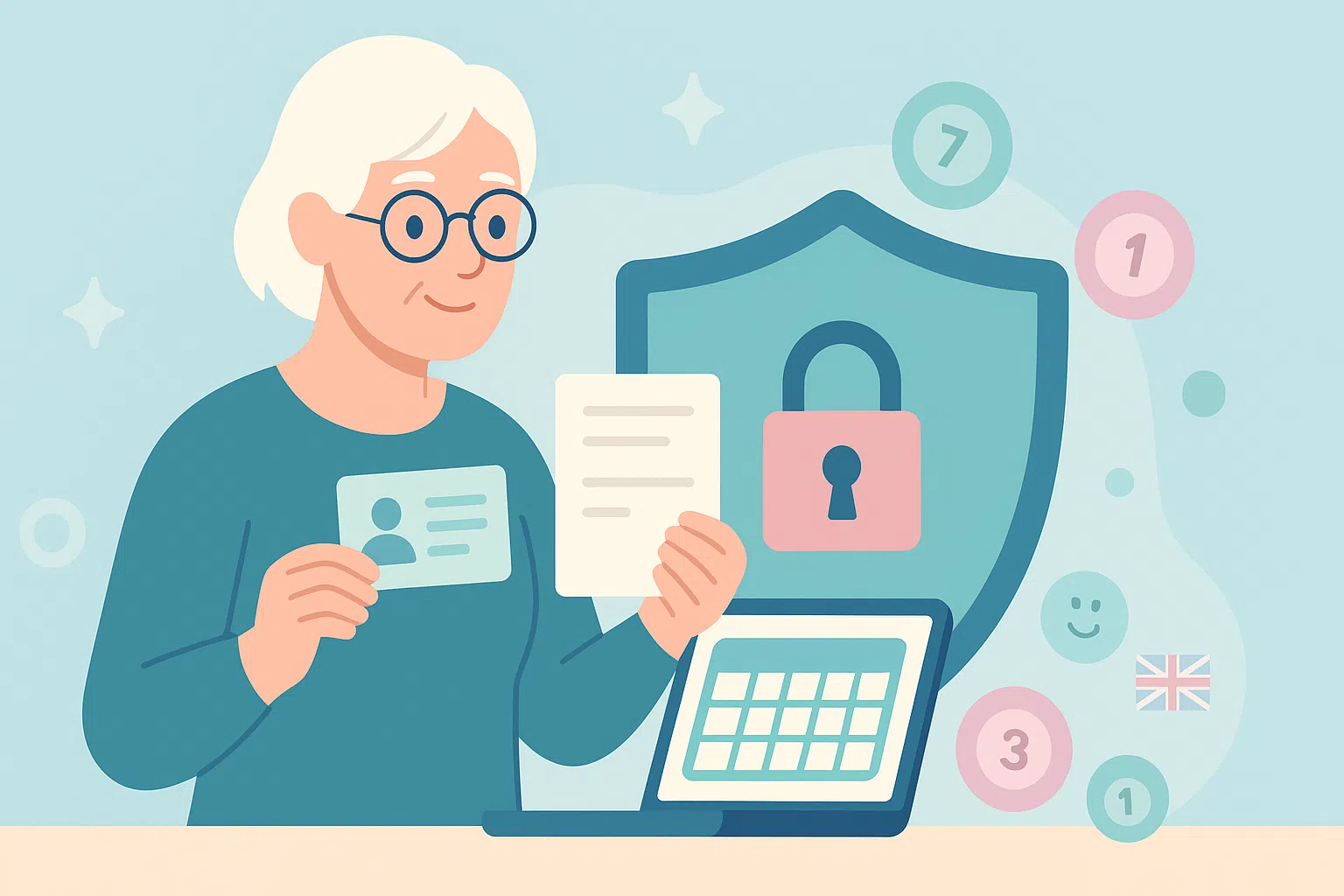
If you play at any licensed UK bingo site, you will be asked to prove who you are. That might feel awkward the first time it happens, especially if you only hear about KYC when you try to withdraw. It is not a trick; it is how the regulator expects every operator to run.
Handled properly, KYC is a one-off admin job that clears the way for smoother play and withdrawals. This guide explains what is going on, what documents you will usually need and how to stop verification turning into a long back-and-forth.
KYC (know your customer) is the name for the ID checks UK bingo sites must run before you can gamble or withdraw.
In this guide we will cover:
- What “know your customer” (KYC) actually means at UK bingo sites.
- The key UK rules in simple language, including your basic rights.
- Which documents operators usually ask for and why.
- How the verification process works from sign-up to withdrawal.
- How to make KYC as painless as possible with a few simple habits.
- What to do if your account feels stuck in verification.
- Why “no ID needed” bingo sites are more worry than convenience.
18+ only. BeGambleAware.org
What KYC Means at UK Bingo Sites
KYC stands for “know your customer”. In practice, it means a bingo site must check your identity, age and address before letting you gamble with real money. Some operators also apply checks before you can access certain free rooms or promotions.
Bingo brands use KYC to:
- Confirm you are 18 or older.
- Reduce the chance of stolen cards or hacked accounts being used.
- Meet anti-money laundering and affordability duties.
- Link your profile into tools such as GAMSTOP and other self-exclusion schemes.
If a bingo site never asks for any ID at all, that is not a bonus. It usually means you are dealing with a business that is ignoring UK rules, which makes it much harder to get help if there is a problem.
The UK Rules in Simple Terms
Your rights under the UKGC KYC rules
The UK Gambling Commission sets standards for all licensed bingo and casino brands. For identity checks, the main rule is Licence Condition 17.1.1 on customer identity verification.
In simple terms, UK-licensed operators must:
- Verify your identity, including name, address and date of birth, before you are allowed to gamble with real money.
- Avoid demanding basic information for the first time only when you ask to withdraw, if they could reasonably have asked earlier.
- Tell you upfront what kinds of documents they might need, when they might ask and how to send them.
- Take reasonable steps to keep your identity information accurate and up to date.
If you want to see the exact wording, you can read Licence Condition 17.1.1 on the official Gambling Commission website. It sets out how operators are expected to handle verification and when extra checks can be justified.
Why checks now happen before you can play
Years ago, many sites let you deposit and play first and then only asked for ID at the point of your first withdrawal. That created a lot of angry conversations at cashout, which is exactly what the regulator wanted to reduce.
The rules were tightened so that identity checks now happen earlier. In practical terms, you should expect to be verified before:
- Gambling with real money; and
- Withdrawing any winnings from your account.
Some brands also ask for documents early in the relationship because it is easier to sort once than to delay payouts across many withdrawals later.
KYC, affordability and responsible gambling
KYC is not just about catching fraud. Operators also use identity and behavioural information to:
- Check your play does not look far outside normal income levels.
- Keep a record when customers set limits, self-exclude or use cooling-off tools.
- Spot patterns that may show problems, such as very long sessions or sudden jumps in deposits.
That is why some players are asked for extra documents or questions once their deposits and withdrawals reach certain levels, even if they have already passed basic ID checks.
What Documents You Will Usually Need
You will not be asked for every document on this list, but it is worth knowing what may come up.
Core identity documents
To prove who you are, bingo sites usually accept:
- Passport.
- UK driving licence (full or provisional).
- National ID card (where applicable).
- Birth certificate in some situations, often alongside other documents.
The document should be in date, show your full legal name and be clearly readable. Blurred photos, heavy glare and cut-off corners are common reasons for rejection.
Proof of address
To confirm where you live, operators will normally ask for one of:
- Bank or building society statement.
- Utility bill such as gas, electricity or water.
- Council tax bill.
- A recent letter from a government department, such as HMRC.
These usually need to be dated within the last three months and show the same name and address you used when you created your account.
Proving your payment method
It is common for brands to confirm that the payment method you use belongs to you. What they ask for depends on how you pay:
- Debit card: A clear photo of the front of the card with your name and the last four digits visible. You should cover the middle digits and the security code on the back.
- E-wallets (such as PayPal): A screenshot of your account page that shows your full name and email or account ID.
- Bank transfers: A statement or screenshot that shows your name and the relevant account number.
The goal here is to stop stolen cards or accounts from being used and to make sure that money goes back to the same person who deposited it.
Source of funds and extra documentation
If you deposit or withdraw larger amounts, or your play stands out compared with normal patterns, you may be asked for extra documents that show where your gambling money comes from. Examples include:
- Recent payslips or a P60.
- Bank statements that show regular income and savings.
- Statements for investments or savings accounts.
- Evidence for one-off funds such as sale of a property or other assets.
Many players never reach this stage. For those who do, it is usually a one-time check unless your spending or situation changes again later on.
| Document type | What it proves | Key tip |
|---|---|---|
| Photo ID | Identity and age | Must be in date and clearly readable |
| Proof of address | Where you live | Use a recent bill or statement within three months |
| Payment method | Ownership of card or account | Show name and last four digits and cover security code |
| Source of funds | Where gambling money comes from | Usually only needed at higher deposit or withdrawal levels |
18+ only. BeGambleAware.org
How the Verification Process Works
Step 1 – Create your account carefully
When you register at a bingo site, you will be asked for:
- Your full legal name.
- Your date of birth.
- Your current home address.
- Your email address and mobile number.
Type these exactly as they appear on your documents. Swapping in nicknames, old addresses or slightly different spellings may cause automatic checks to fail and slow everything down.
Step 2 – Automatic checks in the background
Most operators run your details against electronic databases such as the electoral roll and credit reference data. This is typically a soft enquiry that does not show up as a lending application.
If everything matches, basic verification may complete almost instantly. If the system cannot match you, the site will ask you to upload your ID and proof of address.
Step 3 – Uploading documents
Documents are usually uploaded through a secure area inside your account or a dedicated upload link. A few brands also accept email, although that is becoming less common.
To avoid being asked for the same document twice:
- Use original photos or high-resolution scans, not screenshots of screenshots.
- Make sure all corners of the document are visible.
- Check that all text, dates and your photo are clear and readable.
- Do not cover your name or address when you cover card digits or security codes.
If the site asks for more than one document, send everything they have requested in the same batch so the team can review it in one go.
Step 4 – How long KYC usually takes
Most bingo sites aim to review documents within a few hours. At busy times, such as weekends or big promotion days, it can take up to 24–48 hours for a full review.
You can speed things up by:
- Uploading documents as soon as they are requested.
- Double-checking that files are clear and in date before you send them.
- Replying promptly if the team asks for a new image or extra detail.
Some players prefer to upload key documents shortly after sign-up, even if the site has not asked yet, so that future withdrawals are less likely to be held up.
How often will you be asked for KYC?
In many cases, full KYC is only needed once per brand. You may be asked again if:
- Your ID expires.
- You move house or change your name.
- You start using a new payment method.
- Your play pattern changes and reaches levels that trigger extra internal checks.
It may feel like you are being singled out, but it is more likely the operator working through the same rules that apply to every customer.
KYC and Your Withdrawals
Why KYC should not appear out of the blue at withdrawal
Under current rules, a bingo site should not wait until you request a withdrawal to ask for basic identity details if they could reasonably have asked earlier in the relationship.
They are still allowed to ask further questions at withdrawal when there is a genuine reason. Examples include very large wins that trigger anti-money laundering checks or situations where your documents have gone out of date.
Normal reasons for a delayed cashout
Even on well-run sites, withdrawals can be held back temporarily when:
- The name or address on your account does not match your documents.
- You have used a new card, e-wallet or bank account that has not been verified yet.
- The operator spots multiple accounts in the same name or household.
- Your current withdrawal is large compared with your previous activity.
As long as the site explains what it needs, reviews your documents in a reasonable time and pays out once checks are complete, that is usually normal.
Warning signs that something is not right
You should start to ask firmer questions if:
- The site keeps changing which documents it wants without giving a clear reason.
- You are asked for information that seems unrelated to identity, payments, affordability or anti-money laundering.
- Support cannot or will not explain what is missing or how long review will take.
In those cases, it is worth moving from live chat to the formal complaints process so there is a written record of what has been asked and what you have provided.
18+ only. BeGambleAware.org
How to Avoid KYC Headaches
You cannot skip KYC on licensed sites, but you can make it much smoother with a bit of preparation.
Before you join any bingo site
- Create a secure folder on your phone or computer with:
- A clear photo of an in-date photo ID.
- A recent proof of address, such as a bank statement or utility bill.
- A masked image of your debit card if you plan to use one.
- Check that your bank, utility bills and ID all show the same name and address.
When you register
- Use your full legal name and correct date of birth.
- Enter your current home address, not a previous address.
- Only use payment methods that are in your own name.
Once you are playing
- Send everything the site asks for in one go rather than drip-feeding one document at a time.
- Do not keep depositing while ignoring KYC emails; it only delays your own withdrawals later.
- Keep copies of any documents you send and any messages you receive about verification.
If you are ever unsure whether a request is genuine, log in directly to the bingo site in your browser and check there rather than clicking links in emails.
KYC, Privacy and Data Security
How operators should handle your documents
UK-licensed brands must follow UK data protection law when they collect and store customer information. Your documents should only be used for KYC, anti-money laundering checks and responsible gambling duties.
Good practice includes:
- Storing your documents securely.
- Restricting access to staff who actually need to see them.
- Not sharing them with third parties for unrelated marketing.
If you are uncomfortable with how a site talks about privacy and security in its policy pages, it may be safer to close the account and choose a brand that is more transparent.
Will KYC checks affect your credit score?
Identity checks for bingo sites are usually soft checks. They confirm that your details match but do not appear as applications for credit and do not harm your score.
If a brand ever intends to run a hard check for a different product, they should explain this clearly and ask for your permission first.
How to avoid phishing and fake ID requests
Criminals sometimes pretend to be support staff to get hold of documents or full card details. To protect yourself:
- Only upload documents through your secure account area or confirmed support channels.
- Do not send full card images with all digits and the security code visible to anyone.
- Treat any unexpected email or message that asks for ID as suspicious until you confirm it through the official website.
If you are unsure, contact the bingo brand using the details on their site and ask whether the request is genuine before you send anything.
18+ only. BeGambleAware.org
Avoiding “No ID Needed” and Unlicensed Bingo Sites
Why “no ID” is a concern, not a perk
Some offshore sites promote “no verification” or “instant cashouts with no ID”. That might sound attractive if you have had bad experiences with KYC elsewhere, but it comes with clear downsides:
- UK-licensed sites have to verify identity at some point, so “no ID” claims usually point to an unlicensed operator.
- You have little leverage if the operator refuses to pay winnings.
- Games and jackpots may not be audited to UK standards.
- Self-exclusion and other responsible gambling tools are often weaker or missing.
If a site accepts money from UK players and never asks for ID at any stage, it is usually safer to walk away.
Quick licence check before you send documents
Before you upload ID or deposit:
- Scroll to the footer of the site and look for a UK Gambling Commission logo and licence number.
- Click through to confirm the licence details on the regulator’s public register.
- If you cannot find a licence, or the details do not match, do not send your documents or money.
On BingoMum, we only list brands that show a valid UK licence in their footer.
If Your KYC Is Stuck or Seems Unfair
Step 1 – Speak to customer support or the verification team
Start with a calm but clear message through live chat or email. Ask:
- Exactly which documents are missing or unclear.
- How they would like you to send them.
- How long a review normally takes once they have everything.
Sometimes, a simple issue, such as an unreadable photo, is the only thing holding the process up.
Step 2 – Raise a formal complaint
If nothing moves after you send what they ask for:
- Follow the operator’s formal complaints procedure.
- Explain that you believe you have supplied valid documents and set out what you want to happen.
- Keep copies of all emails and chat transcripts in case you need them later.
A formal complaint often prompts a more careful review by a senior member of staff.
Step 3 – ADR and the regulator
If you still feel you are not being treated fairly:
- Check which alternative dispute resolution (ADR) body the operator uses and consider taking the case there.
- If you believe there is a broader problem with how the brand handles KYC, you can also report your concerns to the Gambling Commission.
The regulator does not resolve individual payout disputes, but repeated problems can contribute to enforcement action against badly run operators.
KYC and Affordability Checks
The UK is moving toward more structured affordability checks at certain levels of deposits and losses. These are sometimes called light-touch financial checks.
In practice, this can mean:
- Short questions about your income and regular financial commitments.
- Requests for bank statements or payslips if you are depositing very high amounts.
- Limits or pauses on your account if the operator is not satisfied that your current level of play looks sustainable.
If you are asked for extra information, the operator should explain what they need and why. You are free to say no, but if you do, the brand may close or limit your account because it cannot meet its legal duties without that information.
For many casual bingo players, affordability checks never go beyond the basic KYC steps. They are more likely to appear for people who deposit larger sums or play very frequently. If you are worried about how much you are spending, our responsible gambling page explains the tools and support options available.
18+ only. BeGambleAware.org
Where to Play Once Your ID Is Verified
Once your documents are in order, the next step is to pick a bingo site that matches how you like to play. Some brands lean toward bigger networks and jackpots, while others focus on community feel, low-ticket rooms and steady daily offers.
Here are 3 top picks for safe and trusted sites for UK customers, each with established, safe and fair KYC procedures:

*£20 Bingo Bonus or 50 Free Spins: New players. Dep (Excl. PayPal & Paysafe) & spend min £5 (within 7 days) on selected slots for spins or £5 in selected bingo rooms – 5x wagering for bingo bonus. Individual promo T&Cs apply.
18+ Please Play Responsibly. GambleAware.org. #AD

*100 Free Spins: New customers only. Min 1st Deposit £10. Deposit & Spend £10 on Slots to get 100 Free Spins (£0.10 each, valid for 7 days, selected games). Claim within 7 days from reg. Player restrictions and T&Cs apply.
18+ Please Play Responsibly. GambleAware.org. #AD

Signup online and get a 10 free spins bonus with no deposit required.
*10 Free Spins No Deposit: Register for first time successfully online at buzzbingo.com as new player. No deposit required. Get £2.00 (10 x 20p) Rainbow Riches slot bonus. 10x wagering requirements on bonus. Full T&Cs apply.
18+ Please Play Responsibly. GambleAware.org. #AD
18+ only. BeGambleAware.org
KYC and Verification FAQ
About This Guide
This guide is written and regularly updated by the BingoMum editorial team, who have been reviewing UK bingo sites and bonuses since 2015. We focus on UK-licensed brands and cross-check details against official terms and the UK Gambling Commission’s rules so you can make more informed choices. You can learn more about the team.